
Le journal Morosko
How to Buy Authentic Moroccan Crafts in France (and Online)
There are three main ways to buy Moroccan crafts in France: shops and craft fairs, large online marketplaces, and brands that work directly with workshops in Morocco. Whichever you choose, insist on a precise origin, look closely at the finishing, and check that the price shown includes import duties and taxes.
“Was this really made in Morocco?” The question comes up the moment you fall for a leather tote, an embroidered jacket or a hooded cape. Between a piece a friend brought back from a souk and a product page on an unknown website, there is a world of difference. This guide gives you the right reflexes to buy with confidence from France.
Where can you buy Moroccan crafts in France?
Shops, markets and craft fairs
This is the most reassuring route for the senses: you can touch, weigh and try. Delis, homeware shops, makers’ markets and craft fairs regularly carry Moroccan pieces. The downside is that the origin often gets lost along the way: between the workshop and the shelf, the piece has passed through several hands, and the seller doesn’t always know who made it, or where.
Large online marketplaces
The choice is huge, and that is exactly the problem. Genuinely handmade pieces sit next to mass-produced goods described in “artisan” language. The same photo can appear on several shops. Everything depends on the seller’s page: who they are, where they ship from, and what they say precisely about the piece.
Brands and designers working directly with workshops
This is the route with the most traceability. The brand knows the workshop, follows production and can tell you where, how and in what material the piece was made. It is also the easiest way to buy Moroccan crafts online with a clear price and customer service in France.
| Channel | What you gain | What to check |
|---|---|---|
| Shops, markets, fairs | Seeing and touching before you buy | The real origin and how many middlemen are involved |
| Large marketplaces | Choice and comparison | The seller, the shipping country, charges on delivery |
| Brands working directly with workshops | Traceability and a real contact | That the promises (origin, material) are written on the product page |
How can you tell a piece is truly handmade?

No single clue is enough, but together they paint a reliable picture.
- Textiles. Look inside: clean seams, careful finishing at hems and necklines. Hand stitching is even without being mechanical.
- Embroidery. Turn it over. Good embroidery stays neat and legible on the back; careless work shows loose threads and knots.
- Leather. Check the edges: on a fine piece they are smoothed or dyed, not frayed. A hand-braided strap is tight and regular along its whole length.
- Small variations. No two handmade pieces are exactly identical. A slight difference in shade or braid is not a flaw: it is the mark of the hand.
- The words. “Moroccan style”, “Oriental-inspired” or “Berber spirit” describe a look, not an origin. “Handmade in Morocco” or “handmade in Fès” are claims: they commit whoever writes them.
Morocco also has official markers. The ministry in charge of crafts has developed labels registered as collective certification marks, to guarantee the origin and quality of certain products and help buyers choose. If a piece carries one, that is a valuable clue; if it doesn’t, it doesn’t mean the piece isn’t handmade, but the other questions matter all the more.
What questions should you ask before you buy?
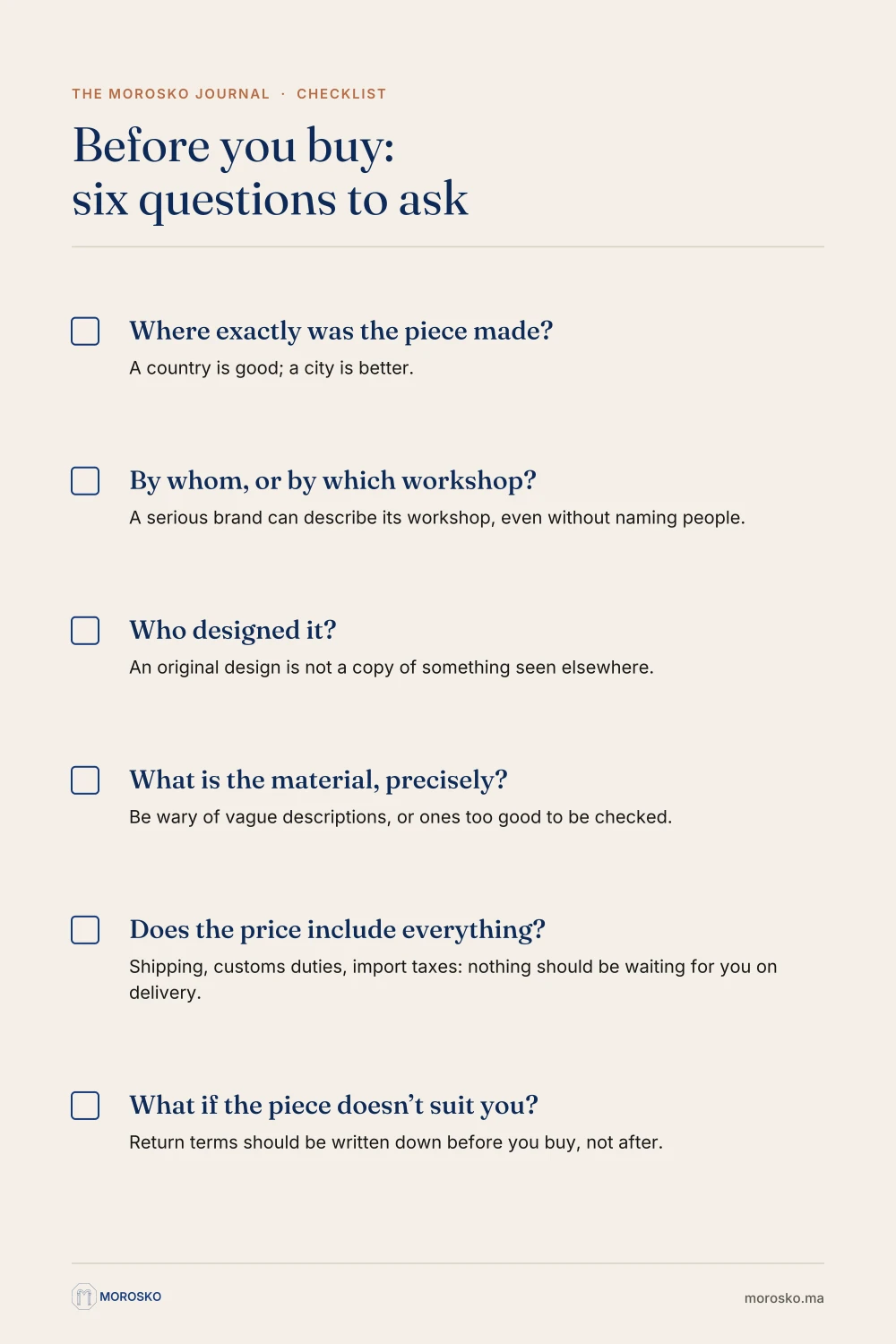
In a shop or on a website, these questions sort things out in minutes:
- Where exactly was the piece made? A country is good; a city is better.
- By whom, or by which workshop? A serious brand can describe its workshop, even without naming people.
- Who designed it? An original design is not a copy of something seen elsewhere.
- What is the material, precisely? Be wary of vague descriptions, or ones too good to be checked.
- Does the price include everything? Shipping, customs duties, import taxes: nothing should be waiting for you on delivery.
- What if the piece doesn’t suit you? Return terms should be written down before you buy, not after.
Customs, VAT and charges: what changes when the piece comes from Morocco

Morocco is not part of the European Union. A parcel from there goes through customs on arrival in France, and that is often where unpleasant surprises begin.
The rules have changed a lot in recent years. Since 1 July 2021, VAT has applied to all imports into the EU from the very first euro. Since 1 July 2026, the EU has abolished the customs duty exemption that small e-commerce parcels used to enjoy, replacing it with a temporary flat-rate duty that the platform, seller or carrier must declare and pay. On top of that, carriers may charge handling fees for the customs paperwork: they set these freely, and they are not a tax.
In practice, remember one thing: before you pay, check that the price shown includes duties and taxes. If it doesn’t say so, charges may be requested on delivery. These rules keep evolving: for a specific case, the French customs website remains the reference.
At Morosko, we currently deliver to mainland France, with customs duties and import taxes included: the amount shown at checkout is the amount you pay, with nothing to pay on delivery. Up-to-date terms are on our Shipping page.
What does handmade work really cost?
A handmade piece costs what it costs for good reasons: working time, the artisan’s experience, short runs, materials chosen one by one. A very low price for something sold as handmade should make you wonder: either the piece isn’t handmade, or someone, somewhere, isn’t being paid properly.
Conversely, a higher price is no guarantee in itself. What matters is consistency between the price, the stated origin and what the brand can explain. And an honest price is a complete one: shown before you pay, with no charges turning up at the door.
At Morosko: how we work
Morosko grew out of a simple wish: to bring Moroccan craft skills into an everyday wardrobe, without folklore. All our pieces are genderless: anyone can wear them.
The ATLAS collection, handmade in Fès (page in French), designed by Ghali Khomsi, founder of Morosko, is made by hand by artisans in the city; its garments are made from fabric bought in Fès. We follow production with them and with the fabric seller, with no middlemen. The pieces come in a numbered series, and each is named after a person, a place or a moment that inspired it: the NASNAS and TROZE selhams, the FITA blazer, the RARI chore jacket, the DRISSI tunic, the ASSANE trousers, the KIMA and CHÉDA shoes, the FRANE tote and the ZROU belt. Outside the collection, the SWIRA leather tote and the COLIN trousers are handmade in Morocco.
 NASNAS
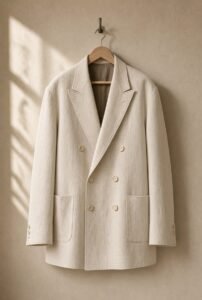 FITA
 RARI
 KIMA
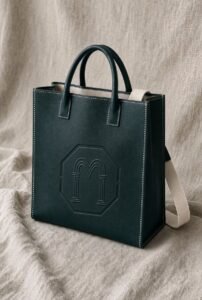 FRANE
What we don’t sell matters too: you won’t find zellige, rugs or pottery with us. These arts inspire us and we love telling their stories, as in our article on Fès zellige, but our craft is clothing and leather goods.
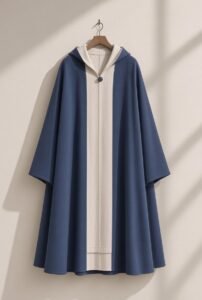
Looking for a holiday idea? Our Moroccan handmade gift ideas for Christmas go through our pieces, profile by profile. And if the hooded cape intrigues you, discover the genderless selham (page in French).
Discover the ATLAS collection (page in French), handmade in Fès, or browse all our handmade pieces (page in French).
FAQ: buying Moroccan crafts in France
Where can I buy authentic Moroccan crafts in France?
In a shop, at a makers’ market, on an online marketplace or from a brand that works directly with workshops in Morocco. The channel matters less than the information given about origin, material and price.
Can I buy Moroccan crafts online with confidence?
Yes, if the website clearly states where and by whom the piece was made, shows a price including duties and taxes, and sets out its return terms before you buy.
Will I pay customs charges on a parcel from Morocco?
It depends on the seller. Because Morocco is outside the EU, VAT, and where applicable customs duties, are due on import; if the price doesn’t include them, they may be requested on delivery, along with carrier handling fees. On morosko.ma, everything is included.
How do I know if a Moroccan piece is really handmade?
Look inside and at the back (seams, embroidery, leather edges), accept small variations between pieces, and ask for a precise origin. Words like “style” or “inspired” guarantee nothing.
What is a Moroccan craft label?
A collective certification mark developed by the Moroccan ministry in charge of crafts, guaranteeing the origin and quality of certain products. Its absence doesn’t prove a piece is factory-made, but its presence is a good sign.
Sources
- French customs (DGDDI): Anticipating customs charges on a parcel and Flat-rate customs duty on distance sales of imported goods (in French)
- European Commission: EU Customs Reform and Customs duty for low-value parcels
- Council Regulation (EU) 2026/382 of 11 February 2026, Official Journal of the European Union: EUR-Lex
- Moroccan Ministry of Tourism, Handicrafts and Social and Solidarity Economy: Quality and innovation (in French)
- Wikipedia (French): Artisanat marocain

The ATLAS collection
Pieces handmade in Fès, in a numbered series.
Keep reading

Moroccan Handmade Gift Ideas for Christmas: A Guide to Giving Handmade
The best Moroccan gifts have three things in common: they get used, their origin is clear, and their finish shows the hand that made them. A hooded selham,…
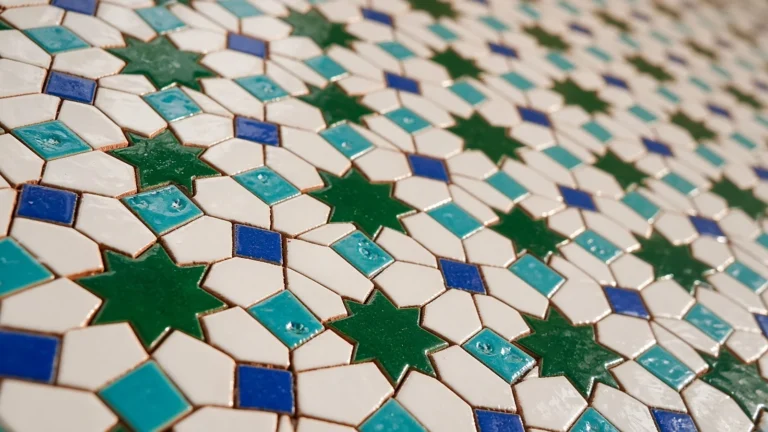
Fès Zellige: The History, Craft and Geometry of a Moroccan Art
Zellige is a mosaic of glazed terracotta, cut piece by piece by hand and assembled like a puzzle into geometric patterns. Born in the medieval western Islamic world,…